
Model and data
Choose the model, prepare datasets, and define the context and response your application needs.
THE TENSORBAY TOKEN FACTORY
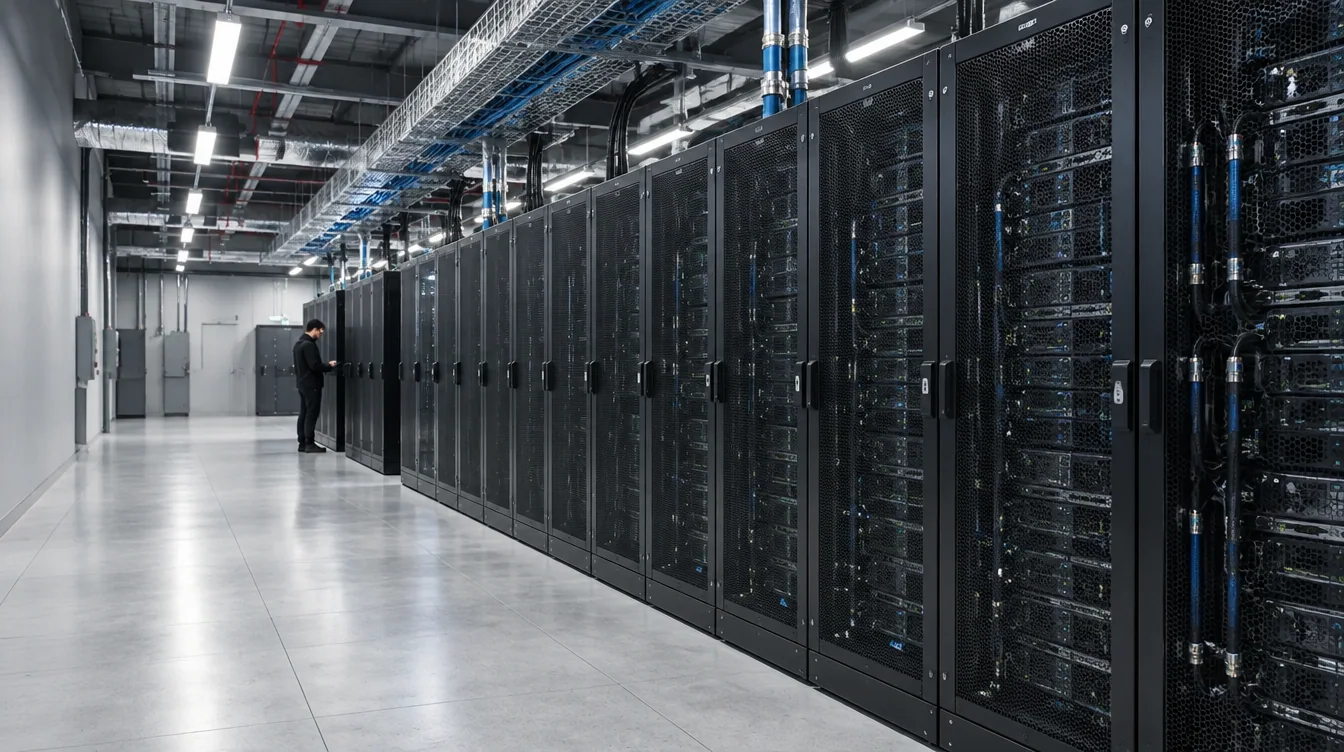
From model training to production inference, TensorBay AIFactory brings the GPU systems, networking, storage, power, cooling, and operations teams plan around AI token generation and use.
FROM MODEL TO PRODUCTION
AI tokens are produced when a model processes input and returns output. Each workload depends on a connected system, not one component alone.
Choose the model, prepare datasets, and define the context and response your application needs.
GPU memory, architecture, and cluster scale shape the capacity available for training and inference.
Move model weights, prompts, and data between the systems that need them.
Applications send input and receive model output. Context length, response size, and demand change the workload.
GPU SERVERS AT THE CENTER
GPUs run training and inference workloads. Power and cooling sustain the rack, while networking and storage keep models and data within reach. Your team operates its models and application in its chosen software stack.
GPU COMPUTETOKENOMICS
Token output and workload cost depend on model behavior, infrastructure, utilization, and application demand. Plan these factors together for a clearer view of production economics.
There is no single cost-per-token figure for every model, prompt, or deployment. Measure the whole workload, then match capacity and reservation terms to how it will be used.
Model architecture, input size, context length, and output shape influence compute requirements.
GPU memory and compute capacity determine which models and workload sizes a system can support.
How consistently the system is used affects planning across reserved capacity and deployment windows.
Traffic patterns, response targets, and usage peaks help define the capacity your team needs.
PLAN THE NEXT STEP
Tokenomics describes the economics of generating and using AI tokens. It brings together model behavior, compute capacity, utilization, and application demand, rather than treating tokens as a standalone infrastructure metric.
TensorBay provides GPU infrastructure for AI workloads. Your team runs its models and applications in the software stack it chooses.
Model choice, context length, GPU architecture and memory, utilization, network and storage paths, and application demand all affect the workload.
Dedicated GPU systems can be planned for model training, fine-tuning, research, and production inference. The right configuration depends on the workload and delivery plan.
08Give your idea room to grow
Tell us about your models, token workloads, capacity needs, and timeline. We can help map a practical next step.